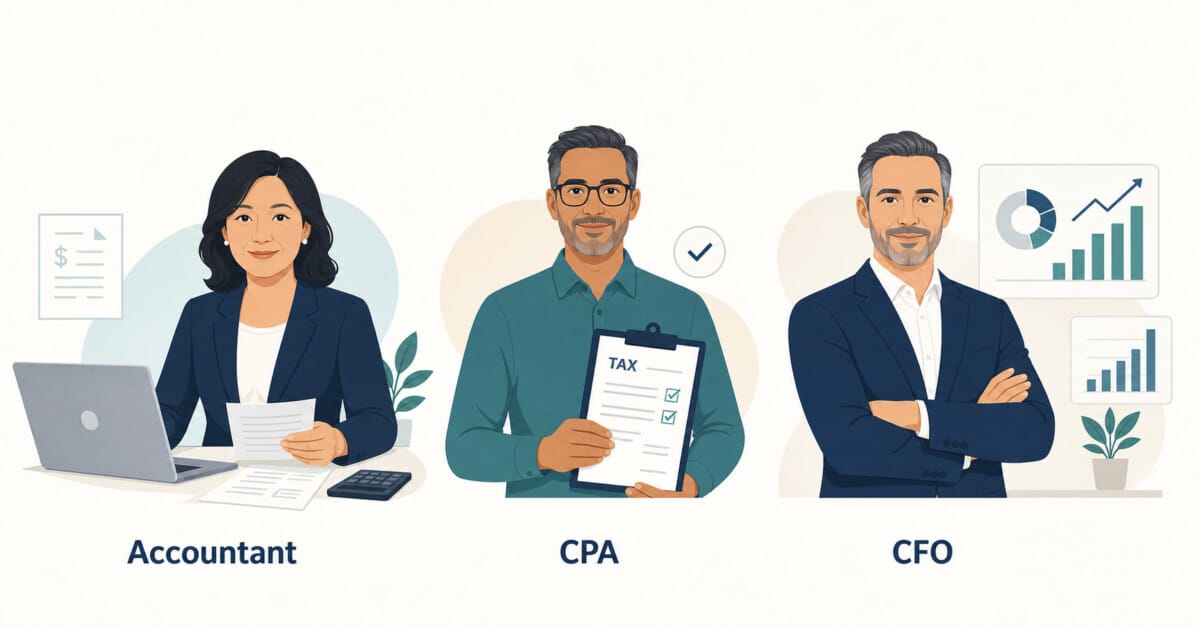


The 7 Most Costly Accounting Mistakes
It’s 8:00 a.m., and Sarah, owner of a small marketing agency, is already in crisis mode. Her phone is blowing up: a late deposit notice from the IRS, an angry email from a contractor demanding benefits, and a text from her bookkeeper saying the books are a mess and the tax bill is going to be brutal.
Sarah didn’t wake up one day and decide to make these mistakes. She’s smart, hard‑working, and focused on serving her clients. But like so many business owners, she’s been doing what feels “good enough” with her finances—until it isn’t.
If this sounds familiar, you’re not alone. Most business owners aren’t accountants. But the 7 mistakes below are the ones that quietly drain cash, trigger audits, and turn a “good year” into a tax nightmare.
Here’s how each one actually plays out in real life—and exactly how a smart accountant would fix it.

1. The Payroll Tax Time Bomb
The Mistake
Sarah thought she was “handling payroll” by writing checks and setting aside cash in her business account. But she missed a federal deposit deadline, and she didn’t realize that her state has different withholding rules and deadlines. Now she’s facing penalties, interest, and a trust fund recovery penalty that could come out of her personal assets.
This is the single most expensive mistake a business owner can make. Not withholding, reporting, or depositing federal and state payroll taxes on time triggers steep penalties from the IRS and her state’s revenue department. Late deposits can also trigger a trust fund recovery penalty (TFRP), which can be personally assessed against owners and officers.
The Fix
- She should use a payroll provider or accountant who handles deposits and filings for both federal and her state.
- She should set up automatic reminders for federal and state payroll deadlines (monthly, semi weekly, etc.) so she never misses one.
- She should never treat payroll taxes as “available cash”—they’re a liability the moment they’re withheld.
- She should reconcile her payroll reports with her bank statements every pay period to catch errors early.
2. The 1099 vs. W2 Trap
The Mistake
To save money, Sarah classified her two main freelancers as 1099 contractors. But they work full time, follow her schedule, use her equipment, and are treated like employees. Now one is threatening to file for unemployment and workers’ comp, and the IRS is questioning her classification.
Treating workers as 1099 contractors when they should be W2 employees is a major audit trigger. The IRS and her state’s labor and revenue departments aggressively pursue misclassification, which can result in back payroll taxes, penalties, interest, and potential liability for unpaid unemployment and workers’ comp.
The Fix
- Sarah should use the IRS’s 20‑factor test to decide whether each worker is an employee or an independent contractor.
- For her multi‑state business, she should document each classification decision and keep that documentation with her records.
- When in doubt, she should treat the worker as a W‑2 employee and adjust later if needed.
- She should review all worker classifications at least once a year, especially if a worker’s role, schedule, or responsibilities have changed.

3. The Personal/Business Money Mix Up
The Mistake
Sarah uses her personal checking account for everything: office supplies, client dinners, even a family vacation she “partially” wrote off. Now her profit is inflated, she’s missing deductions, and her CPA says the commingling could put her personal assets at risk.
Using a personal bank account or credit card for business expenses (or vice versa) is extremely common and very costly. It distorts profit/loss, makes tax preparation messy, can jeopardize limited liability protection, and often leads to missed deductions or overstated expenses.
The Fix
- Sarah should open separate business checking and credit card accounts and treat this as a non-negotiable rule.
- She should set a clear policy: only business expenses go on the business card, and only personal expenses go on the personal card.
- When she pays for business expenses with her personal card, she should reimburse herself from the business account and keep proper documentation.

4. The Expense Categorization Chaos
The Mistake
Sarah lumped everything into “Office Supplies” or “Travel” to save time. Now her P&L is a mess: equipment is expensed instead of depreciated, owner draws look like expenses, and her tax return shows deductions that don’t make sense.
Putting expenses in the wrong category (e.g., capitalizing something that should be expensed, or vice versa) distorts profitability and tax liability. Common errors include misclassifying owner draws as expenses, incorrectly categorizing travel/meals, or treating equipment as supplies.
The Fix
- Sarah should contact an accountant to set up a proper chart of accounts tailored to her business and industry, using software like QuickBooks or Xero.
- She should have her bookkeeper trained on how to code common expenses correctly (for example, equipment vs. supplies, meals vs. entertainment).
- An accountant can review the categories monthly to catch misclassifications early and keep the books clean.

5. The Spreadsheet Trap
The Mistake
Sarah started with spreadsheets and never upgraded. Now she’s manually entering transactions, missing bank fees, and struggling to generate reports. Every month, she wastes hours trying to reconcile and still can’t trust the numbers.
Relying solely on spreadsheets or no system at all leads to errors, duplication, and poor visibility into the business. Without dedicated accounting software, it’s easy to miss transactions, misclassify items, and struggle with reporting.
The Fix
- Sarah should have an accountant move her to cloud accounting software (like QuickBooks Online, Xero, etc.) and set it up so it syncs directly with her bank accounts.
- An accountant will set up recurring transactions and rules to automate data entry, reducing manual work.
- An accountant handles the key built-in reports (P&L, balance sheet, cash flow) so Sarah can see her numbers clearly without rebuilding them in Excel.
- An accountant can also train Sarah or her bookkeeper on how to record common transactions correctly, so day-to-day bookkeeping stays consistent.

6. The ‘I’ll Look at It Later’ Syndrome
The Mistake
Sarah only looks at her financials once a year, right before tax season. By then, it’s too late: she’s overspent, underpriced jobs, and doesn’t realize she’s running out of cash until the bank account is nearly empty.
Running a business without regularly reviewing the P&L, balance sheet, and cash flow statement is like driving blind. Without this data, owners can’t spot trends, control costs, price jobs correctly, or make informed decisions about growth and hiring.
The Fix
- Sarah should schedule a monthly “financial check in” (30–60 minutes) to review P&L, balance sheet, and cash flow.
- She should focus on key metrics: gross margin, operating expenses as a % of revenue, and cash runway.
- She should use these numbers to adjust pricing, hiring, and spending before problems get out of control.
- She should set up alerts (e.g., low cash balance, high expenses) to warn her before a crisis hits.
- An accountant can run these monthly check ins and show her exactly how to use the numbers to grow profitably.

7. The DIY Disaster
The Mistake
Sarah thought she could handle everything herself to save money. But she missed deductions, made bad entity decisions, and didn’t plan for estimated taxes. Now her tax bill is huge, and she’s paying more in penalties than she would have paid in professional fees.
Attempting to handle complex tax, payroll, or financial reporting without a qualified accountant or bookkeeper often leads to expensive errors. DIY mistakes can include incorrect depreciation, missed deductions, improper entity structuring, and poor tax planning, all of which cost more than professional fees.
The Fix
- Sarah should outsource the complex stuff: payroll, tax planning, and financial planning.
- She should use a CPA or outsourced accounting firm as a strategic advisor, not just a tax preparer.
- An accountant can handle the heavy lifting while she focuses on her business, turning accounting from a cost center into a growth tool.
From Crisis to Control
Sarah’s story isn’t unique. Most business owners make these 7 mistakes because they’re focused on running the business, not the books. The good news? Each of these mistakes is preventable.
By fixing payroll, classification, and recordkeeping, and by using the right tools and professional help, any business owner can turn chaotic finances into a clear, profitable roadmap.
If you’re tired of guessing, scrambling at tax time, or wondering if you’re actually making money, it’s time to stop flying blind.
For state‑specific advice (like payroll rules, withholding, and tax deadlines in your state), The Expert Accountant will walk you through what’s different where you operate and how to keep your business compliant and protected.